The Inevitable Fall
“All things are subject to decay and change.”
— Polybius, The Histories
The simplicity of this quote is what makes it so powerful. At first, it may just seem like an obvious statement. But sometimes obvious statements are needed when people aren’t thinking enough. This statement is just such a harsh reality. All good times in life will end, but it is the same for all bad things. In economics and comparative politics, however, this quote perfectly explains the inevitable fall that every great nation experiences, whether over a large or small amount of time. For example, hardly anyone recognizes what was promised by the party (that I would prefer not to say the name of) in early 1930s Germany. That group promised to bring economic restoration, social harmony, unity, national pride, and strength. Without giving it another thought, the vast majority brushed off the party’s plan to mistreat, and eventually attempt to kill all of the Jews, since it didn’t affect them. The optimistic nation then quickly saw great economic hardship, political instability, and radicalism, which led to a complete despotism. And though they were a threatening power at the time, the entire country was hanging on a loose string economically and financially.
However, the ‘fall’ that is most commonly thought of is the fall of Rome. Though Rome was a great nation in early years, it was always bound to fall. Obviously, this was in the times that hierarchy and division of nations were customary. Yet still, Plato lived before the Roman Empire era. He recognized that a truly successful nation is built upon equal citizens, each with imperative roles in their society. As simple as it may be, it is fair and just.
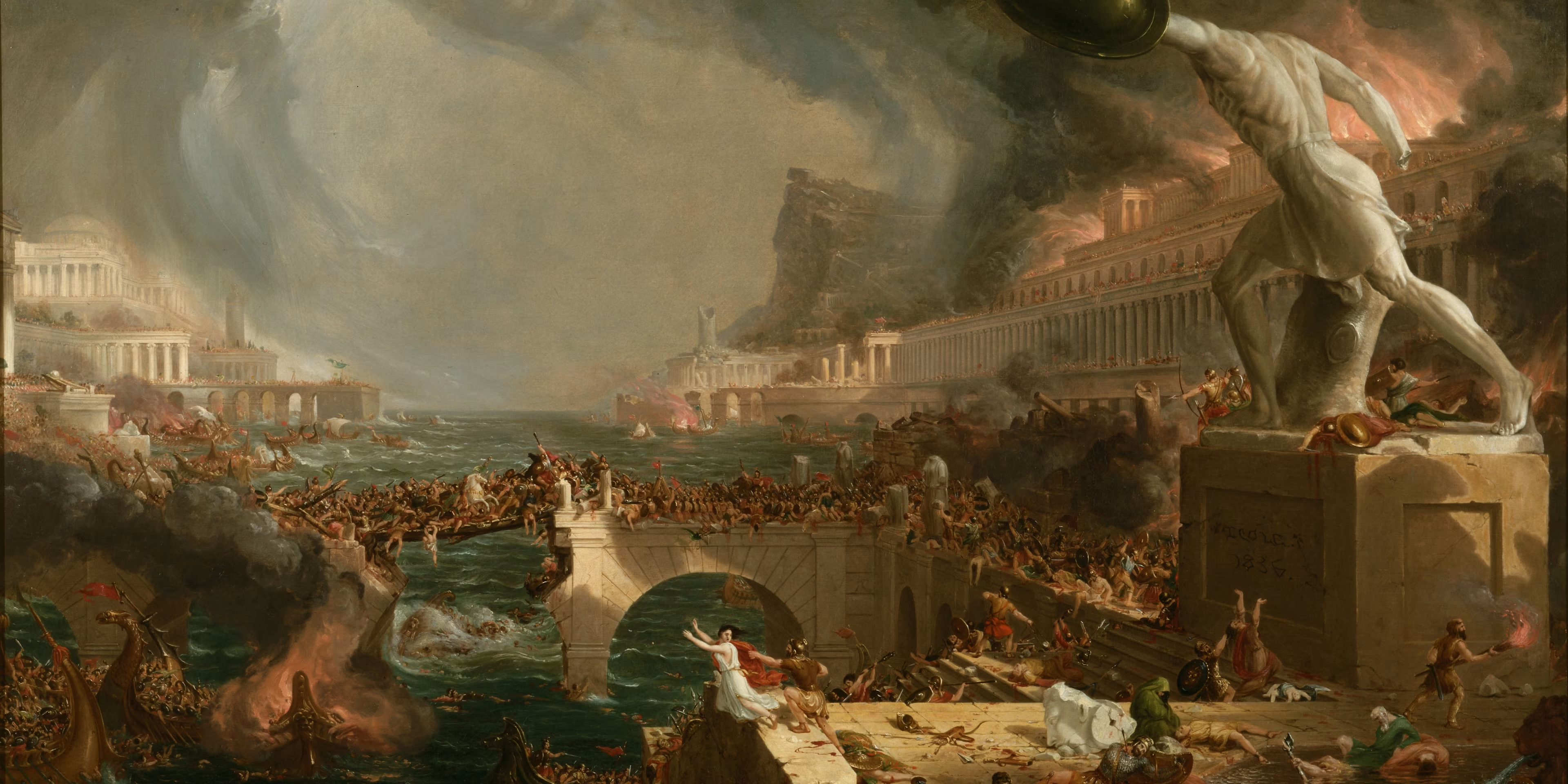
Now, don’t even get me started on Rome. If you were a woman or unwealthy, say goodbye to equal rights. Throughout history, many hierarchies of that sort have been. And the Roman Empire government sounds complicated at first, but it was simply an Emperor with absolute power, and a practically titular Senate. Of course depending that much on one person, especially in that era, was never going to end well. When Diocletian split the Empire in half, economic disparity and loss of unity occurred. To add on to that, exclusionary Christianity, and even Barbarian attacks sent the West into chaos. Then, of course, the Western Roman Empire fell.
Enough of specific topics, though, because what this all proves is more important. Humans naturally drift to power, and think of themselves over their community. Thus, making it theoretically impossible to build a perfect nation, described in Plato’s Republic, while also considering the behavior of other nations, and also the current needs for a nation to stand. I was once told that a house needs a strong foundation to stand. So if a nation doesn’t have a foundation stronger than the rest of it, with people who are equal and care for each other, it will fall. But people drift from caring, and move towards splitting in half, and now that the foundation is split, the building falls, the nation falls. And sadly, that fall is inevitable.
Comments Section
Share your thoughts here!