The History of Lies, Pt. II
“Who controls the past controls the future. Who controls the present controls the past.”
— George Orwell, 1984
One month ago, in the first part of this essay series, I explored the idea that history is uncertain. Along with this, I wrote about the fact that history is shaped not as it truly is, but as it was made to seem. History may just be a controlled set of propaganda that leads us to think a certain way. So how do those ideas shape the way things are in modern history? Even in the present day, are we being told lies from biased sources? In a world so divided, how do we know when ‘facts’ are being created to sabotage certain groups? When ideas are fabricated with the intention of gaining trust and a certain goal for those in power, what can we do to prove them false?
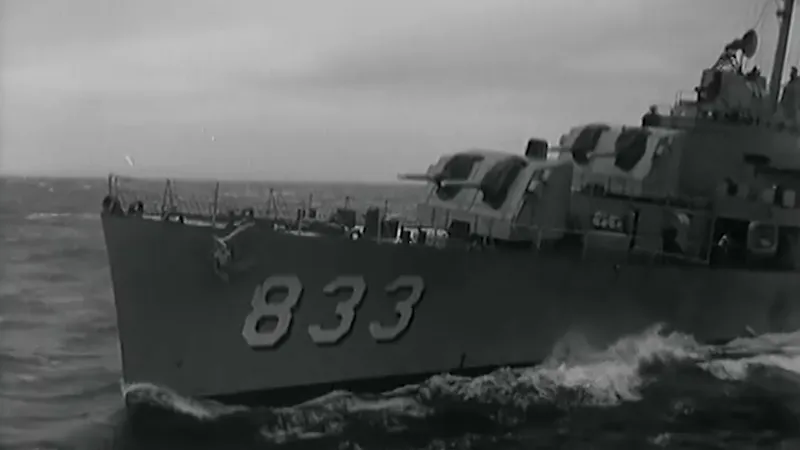
An example of this idea is the origin of the United States’ involvement in the Vietnam War. This event is called the Gulf of Tonkin incident. On August 2, 1964, the USS Maddox was on an intelligence mission, and was attacked by North Vietnamese torpedo boats. The Maddox sustained only minor damage. However, two days later on August 4th, the USS Maddox and USS Turner Joy reported a second unprovoked attack. This ended up being a fallacy, as it was a technical error from the sonar operators. Nevertheless, the United States used this mix-up to create a facade of a victimized U.S. Navy. This gained them the legal authority they had already been seeking to escalate the war. This shows a situation where those in power were seeking a goal, and they lied to gain justification for it. That shows that things we are told that seem justifiable in our minds can truly just be lies.
Another occurrence relating to this idea is McCarthyism of the late 1940s to through the 1950s. This period in the United States was essentially a witch hunt of suspected communists in the U.S. government, military, and private sector. Unsubstantiated charges and sensationalist tactics were used to prove certain individuals as ‘traitors’. This event was fueled by Cold War tensions of the late 1940s, where the ideology of capitalism was being promoted and communism was being slandered in the US, and in vice versa with Russia. The consequences of this event were tragic, including the exile of Charlie Chaplin, and the blacklisting of Arthur Miller’s work. Along with this, a systematic purge of LGBTQ+ employees in the United States federal government occurred, based on the unfounded belief that they were “security risks”. This specific event displays the idea that some ‘facts’ are just created to sabotage certain groups, which can result in tragedy for many individuals.
In summary, the control of information in the present shapes how people view the past. And this shapes what people expect or will believe in the future. What does this mean for today? Well, it means that many of us are being controlled by ways we were told to think. However, I am not saying that we are being controlled, and there is nothing we can do. I am spreading awareness that, hidden under what we think we know, may be the truth. We cannot let these fallacies overpower the truth. This doesn’t mean that nothing can be trusted, it means that we must know what to trust. Thank you for reading Social Science 43, and have an immaculate day.
Comments Section
Share your thoughts here!